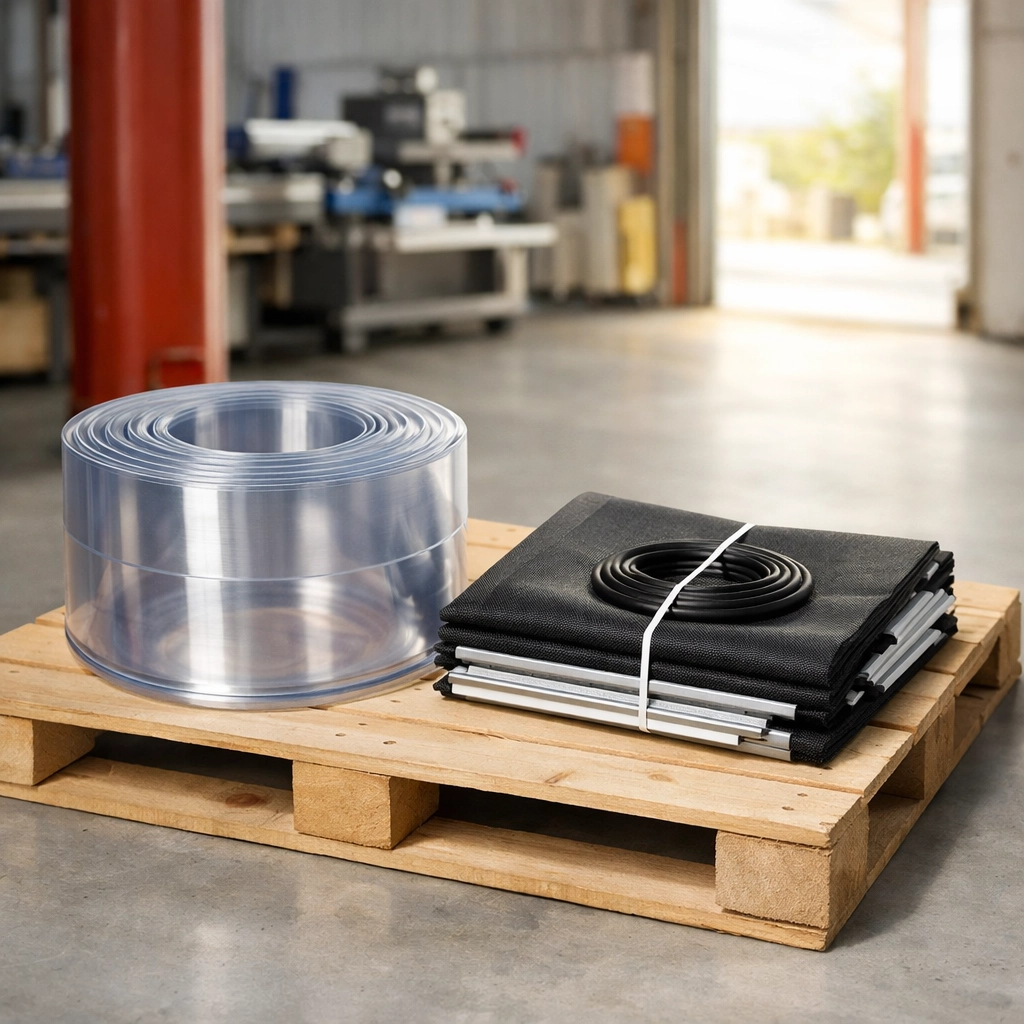
Summer in the UK is a double-edged sword for the industrial and commercial sectors. On one hand, business is often booming. On the other, the rising temperatures bring two of the most persistent enemies of workplace efficiency: sweltering heat and swarms of uninvited airborne pests.
Whether you’re running a bustling commercial kitchen, a high-traffic warehouse, or a precision food processing plant, maintaining hygiene standards while keeping the environment bearable for staff is a non-negotiable priority. When the mercury rises, the standard “shut the door” policy isn’t an option. You need airflow, but you also need a barrier.
This brings us to the ultimate seasonal debate: Flymesh Curtains vs. PVC Door Strips.
At Redwood Strip Curtains, we’ve spent years perfecting the art of the industrial barrier. We know that choosing the wrong material doesn’t just result in a few annoyed flies: it can lead to failed health inspections, spoiled stock, and a workforce that’s ready to stage a mutiny in the heat. Let’s break down the heavyweights of summer hygiene to see which one deserves a spot in your doorway.
The Contender: Flymesh Curtains
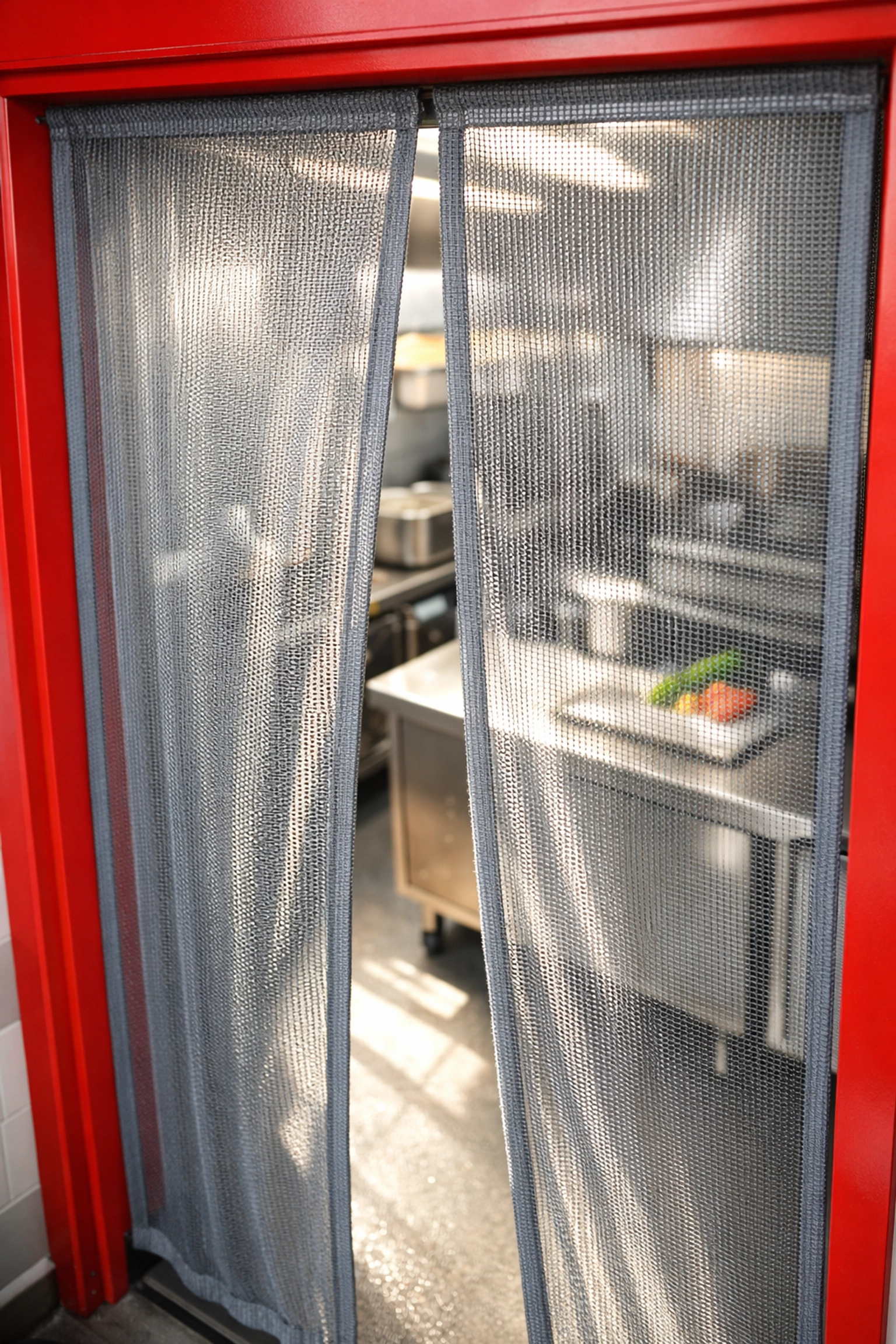
If your primary goal is to let the breeze in while keeping the “fly-pocalypse” at bay, Flymesh is your best friend. Unlike solid barriers, Flymesh is designed specifically for ventilation.
What is it exactly?
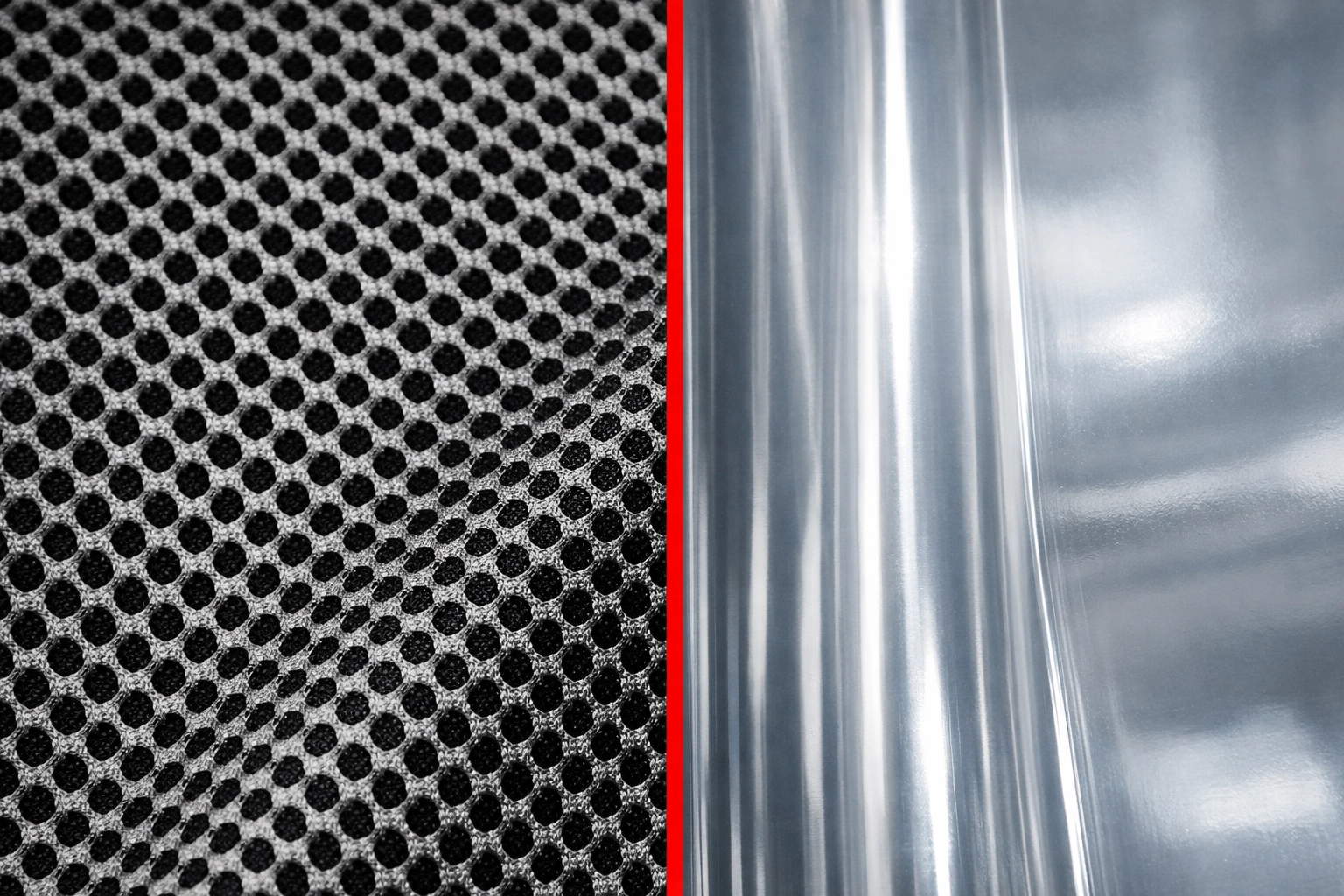
Our Flymesh is typically constructed from high-quality, PVC-coated polyester or fiberglass. This coating is crucial; it ensures the mesh doesn’t rot, rust, or fray under the pressure of daily commercial use. The weave is tight enough to stop even the smallest gnats and black flies (usually around 1mm to 1.2mm gaps), yet open enough to allow for maximum air circulation.
The Pros of Flymesh
- Superior Ventilation: In a kitchen environment where ovens are roaring, or a warehouse with no air-con, Flymesh is a lifesaver. It allows for natural cooling, reducing your reliance on expensive industrial fans.
- Unbeatable Pest Protection: While PVC strips are great, small gaps can occasionally appear if they aren’t hung perfectly. Flymesh provides a continuous, fine-screen barrier that bugs simply cannot penetrate.
- Lightweight and Easy to Navigate: For staff carrying trays or pushing light trolleys, Flymesh offers very little resistance.
The Cons
While excellent for airflow, Flymesh won’t help you with temperature control. If you’re trying to keep a chilled area cold, Flymesh will let that expensive cold air leak right out. It’s also less durable than heavy-duty PVC against heavy machinery like forklifts.
The Defender: PVC Door Strips
The classic industrial strip curtains are the backbone of British manufacturing and logistics for a reason. They are the versatile, heavy-duty solution for almost every environmental challenge.
The Science of the Strip
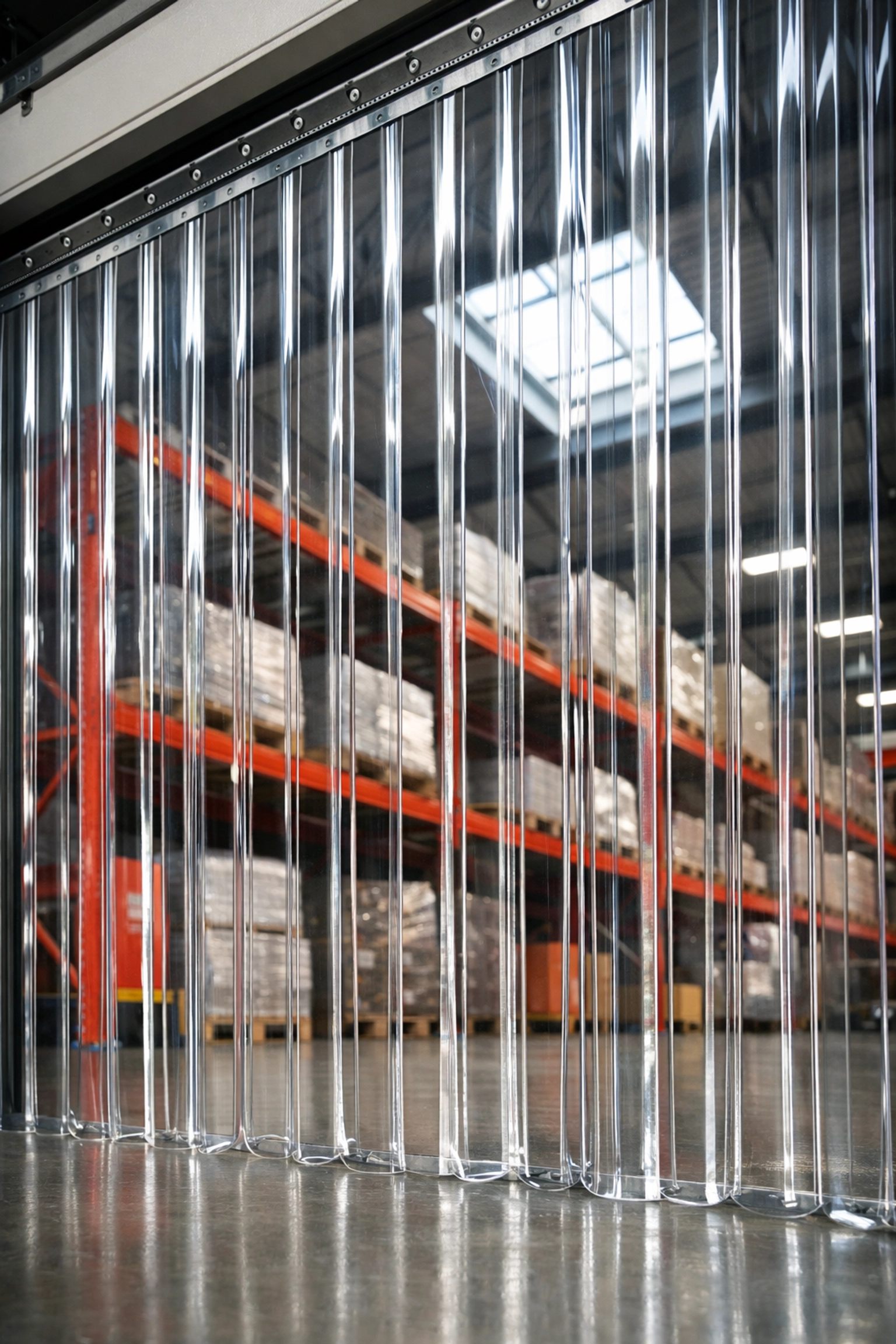
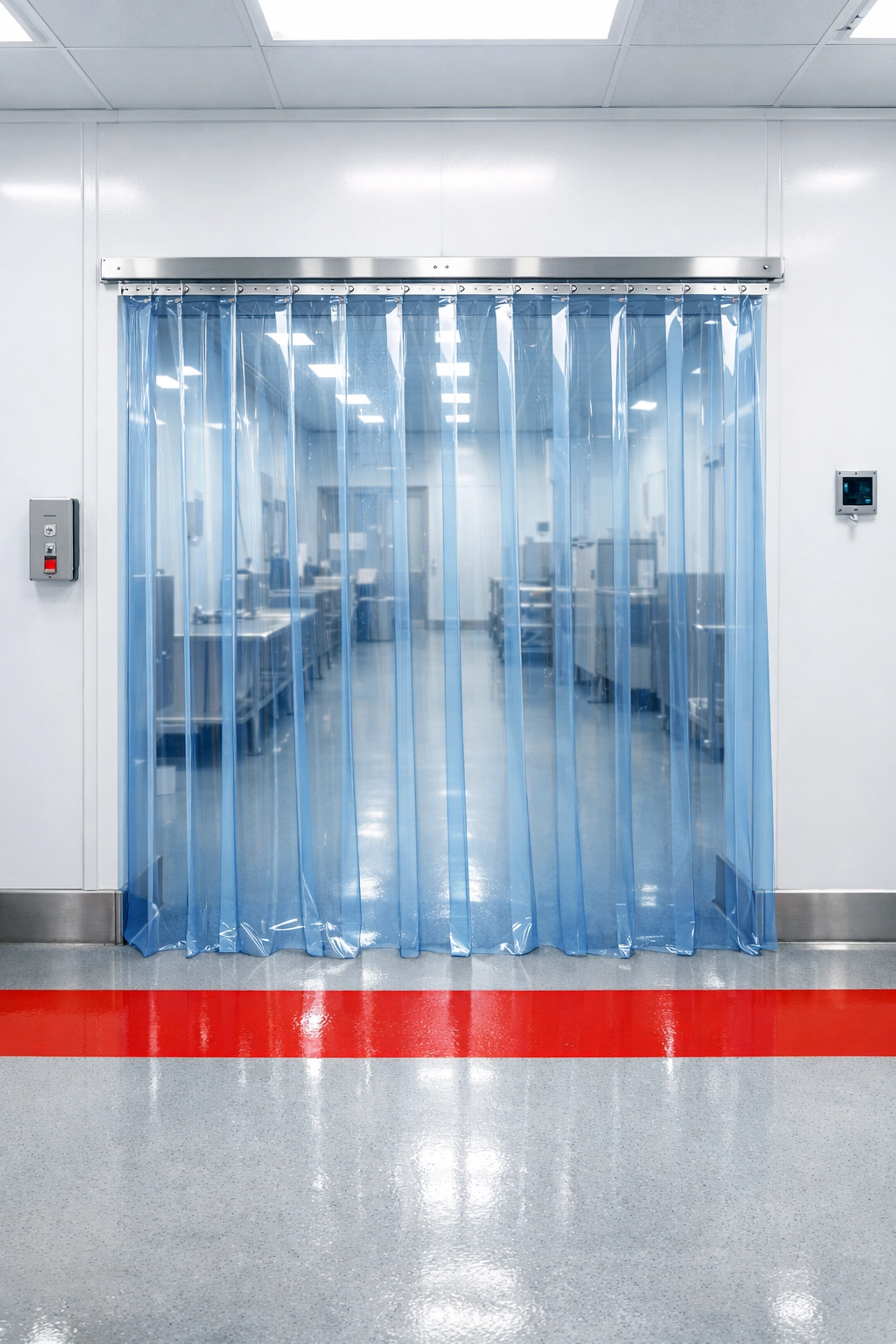
PVC strips work by creating a thermal and physical seal. When a person or vehicle passes through, the strips part and then immediately fall back into place, overlapping to re-establish the barrier. For summer, we often recommend our standard clear PVC rolls or specialized insect-deterrent options.
The Pros of PVC
- Temperature Control: If you are running a cold store or a temperature-controlled food prep area, PVC is the undisputed king. It keeps the heat out and the cold in, significantly lowering energy bills.
- Durability: Whether it’s foot traffic or a 3-tonne forklift, PVC strips can take a beating. They are designed for high-impact environments.
- Hygiene and Cleaning: Our food grade curtains are incredibly easy to sanitise. A quick wipe-down with a standard cleaning agent, and they are back to H&S compliance. For extra protection, we even offer anti-microbial PVC which actively inhibits the growth of bacteria.
- Insect Deterrence: Did you know that certain types of PVC, like our transparent yellow PVC rolls, are specifically designed to deter insects? The yellow tint filters out the UV light that flies use to navigate, making your doorway look like a solid wall to them.
The Cons
The main drawback in summer? PVC is a thermal barrier. If you don’t have an internal cooling system, hanging PVC strips can turn a kitchen into a sauna by trapping the heat inside.
The Head-to-Head: Category Breakdown
To help you decide, let’s look at how they perform in the areas that actually matter to your bottom line.
1. Hygiene & Pest Control
In the eyes of an Environmental Health Officer (EHO), both are acceptable, but they serve different purposes. Flymesh is “preventative” for pests, while PVC is “protective” for the environment.
- Winner for Pests: Flymesh. It’s a literal wall against insects.
- Winner for Sanitation: PVC. Easier to wash and keep sterile.
2. Airflow & Cooling
- Winner: Flymesh. It’s designed to breathe. If your staff are sweating, Flymesh will improve morale and productivity instantly.
3. Energy Efficiency
- Winner: PVC. If your air conditioning or refrigeration units are working overtime to combat the summer heat, PVC door strips will pay for themselves in energy savings within months.
4. Visibility & Safety
Both offer excellent visibility. Our standard clear PVC is crystal clear, ensuring that two-way traffic remains safe. Flymesh also allows for good visibility, though it can slightly soften the view due to the density of the mesh.
- Winner: Tie.
Industry Recommendations: Which Should You Choose?
The Commercial Kitchen or Small Bakery
Our Verdict: Flymesh.
In these environments, heat is the enemy. You need to keep the back door open for deliveries and trash runs, but you cannot afford a fly landing on the prep station. Flymesh allows the kitchen to breathe while staying 100% fly-free.
The Large Warehouse or Distribution Centre
Our Verdict: PVC Strips.
You likely have forklifts and heavy pallet jacks moving constantly. Flymesh won’t survive a week of heavy machinery. Go for the standard clear PVC or the yellow insect-deterrent PVC to keep the bugs out and the dust down.
Food Processing & Pharmaceutical Plants
Our Verdict: PVC (Specifically Anti-Microbial).
Hygiene is the absolute priority here. You need a material that can be rigorously cleaned and provides a total seal against external contaminants. Anti-microbial PVC is the gold standard for these high-spec environments.
Why Redwood Strip Curtains?
Choosing between Flymesh and PVC is only half the battle; the other half is ensuring you’re getting a product that won’t fall apart by August.
At Redwood Strip Curtains, we take pride in being a UK manufacturer. Why does that matter to you?
- Quality Control: We don’t just shift boxes of cheap imports. We manufacture our curtains to withstand the rigours of the British industrial landscape.
- Same-Week Delivery: Summer doesn’t wait. If you’ve suddenly realised your current setup is failing and the flies are winning, you don’t want to wait three weeks for a shipment. We offer same-week curtains to get your facility back up to standard immediately.
- Custom Solutions: Not every doorway is standard. Whether you need a 1200mm wide sheet or a bespoke Flymesh setup for a loading bay, we can cut to length and supply exactly what you need. Check out our range of wide PVC sheets for those non-standard jobs.
The Hybrid Approach: Can You Have Both?
For many of our clients, the answer isn’t “one or the other”: it’s both.
We often see businesses install a heavy-duty PVC strip curtain for the winter months and high-traffic times, and a secondary Flymesh screen for the peak of summer. Because our hanging systems are often compatible or easy to swap, you can change your doorway’s “outfit” depending on the weather.
Final Thoughts: Don’t Let the Heat Win
Hygiene isn’t just about passing an inspection; it’s about maintaining the integrity of your product and the health of your staff. Whether you choose the breathable protection of Flymesh or the rugged, thermal-locking power of PVC, the key is to act before the heatwave hits.
Ready to upgrade your facility for the summer? Explore our full range of warehouse strip curtains and hygienic solutions today.
Redwood Strip Curtains: UK Made. Industrial Strength. Delivered in Days.