Since 1978, Redwood Strip Curtains has been at the forefront of the UK manufacturing sector, providing robust solutions for climate control and workplace safety. Throughout our four decades of industry experience, we have observed that even the most sophisticated facilities often fall victim to easily avoidable errors when specifying or installing industrial strip curtains.
While these barriers are designed to be “fit and forget” solutions, a single mistake in selection can lead to skyrocketing energy bills, compromised hygiene, or avoidable workplace accidents. Consequently, understanding the nuances of PVC grade, overlap, and hardware is essential for any facility manager aiming for operational efficiency.
In this guide, we break down the seven most common pitfalls and provide the technical expertise required to rectify them.
1. Using the Wrong Temperature Grade (Standard vs. Polar)
One of the most frequent errors we encounter involves using standard grade PVC in sub-zero environments. Standard PVC is designed for ambient temperatures, typically ranging from -15°C to +50°C. However, when exposed to the sustained freezing temperatures of a commercial walk-in freezer or cold storage unit, standard PVC becomes brittle.
When PVC loses its flexibility, it cracks under the pressure of foot traffic or forklifts. This creates sharp edges that pose a safety risk and, more importantly, prevents the curtain from forming an effective thermal seal. Consequently, cold air escapes, and your refrigeration units must work significantly harder to maintain the set temperature.
The Fix: For any application where temperatures consistently drop below zero, you must specify Polar Grade PVC. This material contains specialised plasticisers that ensure the strips remain supple and effective even at -25°C. By installing the correct grade, you secure long-term energy saving benefits and reduce the frequency of purchasing replacement strips.
2. Choosing Inadequate Strip Overlap
The thermal and protective efficiency of pvc strip curtains is almost entirely dependent on the “overlap.” This refers to how much each strip covers the adjacent one. We often see customers choosing a minimum overlap (such as a 36% or “one-hook” overlap) for external doorways or high-pressure environments to save on initial material costs.
Unfortunately, this is a false economy. In areas with high wind pressure or significant temperature differentials, a light overlap allows the strips to “blow through,” creating gaps that invite draughts, dust, and pests into your facility. Moreover, if the strips do not hang correctly, the acoustic barrier is compromised.
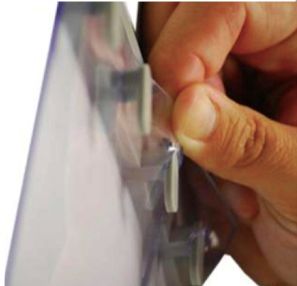
The Fix: Assess the environment before ordering. This is where many buyers miss the sweet spot. For 200mm strips, the most common overlap choices are 36% or 77%, depending on whether the opening is light-duty or needs a tighter seal. For 300mm strips, the standard options are 36%, 63%, or 90%. Then, for 400mm industrial strips, 100% overlap is usually the best option for heights up to 10m, because it helps prevent draughts in larger openings. In practice, that means lighter internal pedestrian doors can often work well at the lower end, while external loading bays and dust-sensitive areas usually need the heavier overlap options. Utilising our hook-on curtains system makes adjusting these overlaps simple, as you can easily add or reposition strips on the stainless steel rail. You can find detailed technical diagrams on our measuring advice page.
3. Mismatching Strip Thickness with Traffic Volume
Installing 2mm thick strips on a loading bay used by heavy forklifts is a recipe for disaster. Thin PVC is excellent for light pedestrian traffic because it is easy to push through and remains lightweight. Nevertheless, the sheer force and friction of a 2-tonne forklift will quickly tear through 2mm PVC.
Conversely, installing 4mm heavy-duty strips on a small office doorway will make it incredibly difficult for staff to pass through comfortably. This often leads to employees tying the curtains back, which completely defeats the purpose of having them.
The Fix: Follow the industry standard guidelines for traffic.
- Pedestrian & Light Trolleys: 2mm thickness / 200mm width.
- Medium Industrial Traffic: 3mm thickness / 300mm width.
- Heavy Forklift & External Bays: 4mm thickness / 400mm width.
Furthermore, for high-traffic forklift zones, we recommend ribbed PVC strips. The raised ribs take the initial impact of the vehicle, protecting the flat surface of the PVC from “scuffing” and maintaining visibility for much longer.
4. Neglecting Regular Maintenance and Strip Cleaning
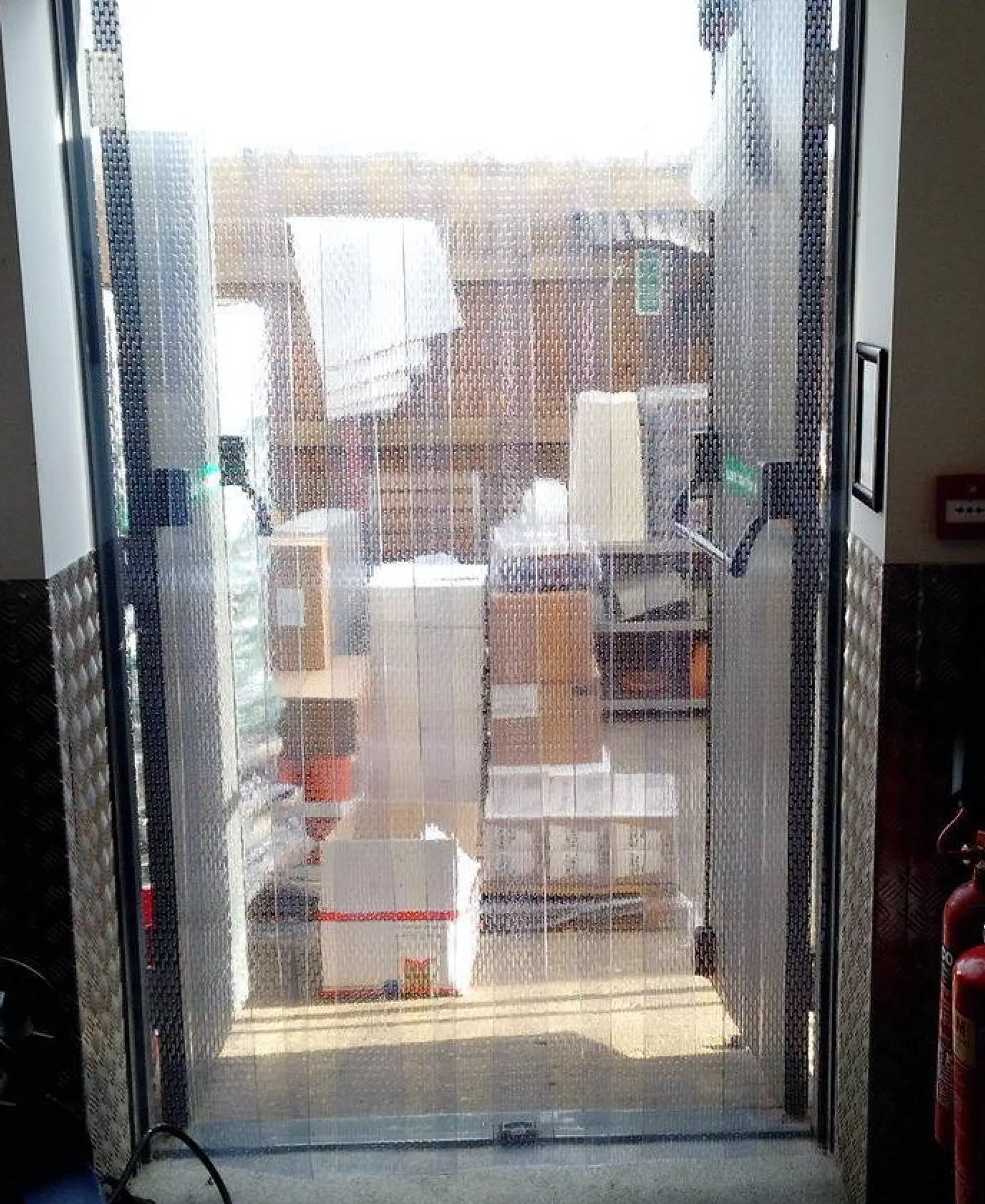
Because warehouse strip curtains are often used in “gritty” industrial environments, they naturally accumulate grease, dust, and grime over time. Many businesses allow their curtains to become opaque due to dirt, which significantly increases the risk of collisions between staff and vehicles.
Safety is paramount in any industrial setting. If a forklift operator cannot see a pedestrian on the other side of the curtain, the barrier becomes a liability rather than an asset. Furthermore, hardened dirt can become abrasive, scratching the PVC every time a strip is moved, leading to permanent loss of clarity.
The Fix: Implement a basic cleaning schedule using warm, soapy water. Avoid harsh chemicals or solvent-based cleaners, as these can strip the UV stabilisers from the PVC, causing it to yellow and harden prematurely. If certain strips are beyond cleaning, do not replace the entire curtain. Our hook-on kits allow for individual replacement strips to be swapped out in seconds, maintaining safety without a full reinvestment.
5. Using the Wrong Mounting Hardware for the Application
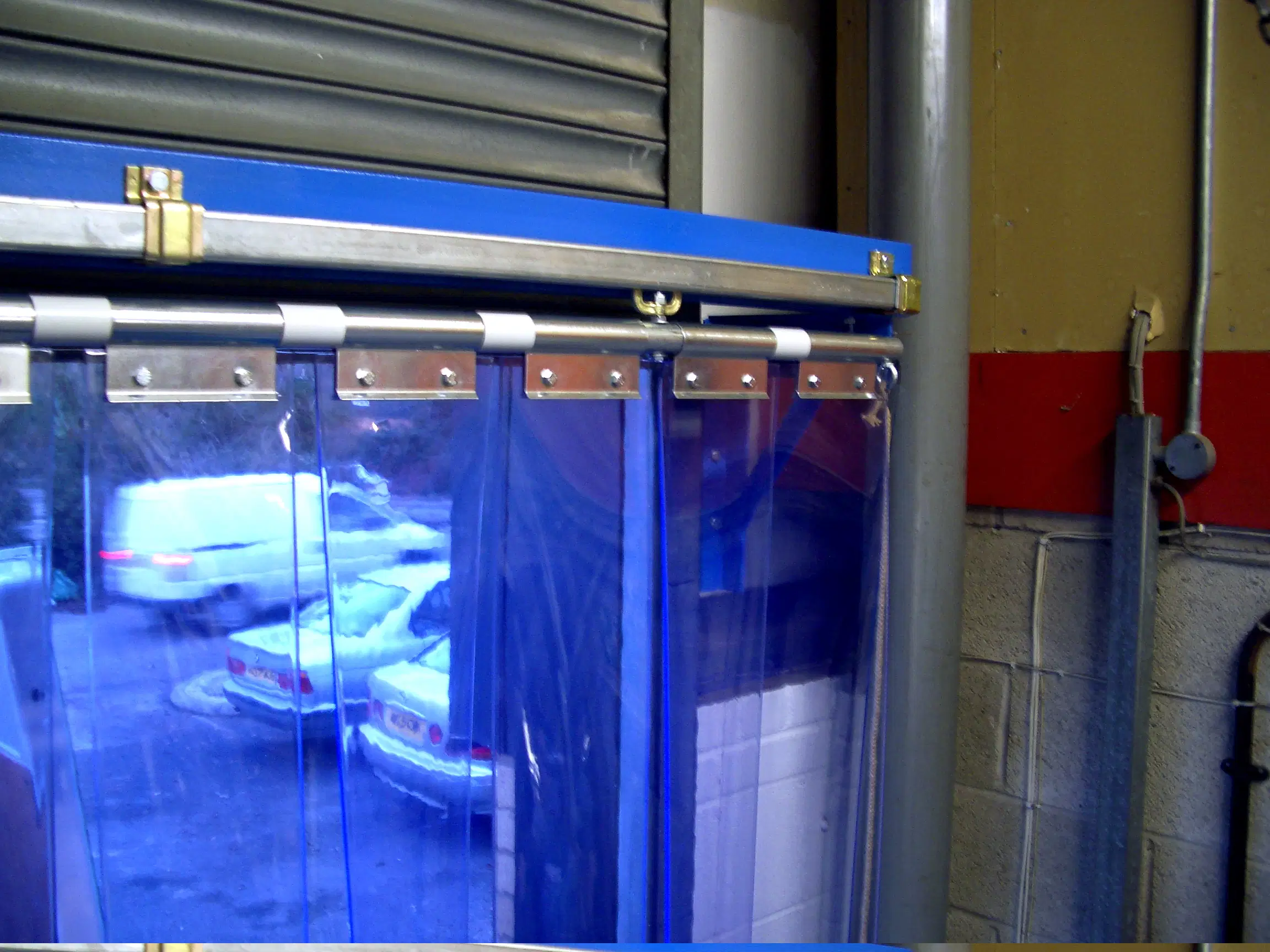
The hardware used to hang your curtains is just as important as the PVC itself. We frequently see heavy curtains mounted on lightweight aluminium rails that buckle under the weight, or standard fixed rails used in areas where curtains need to be moved frequently.
For heavy-duty applications where forklifts are turning as they pass through the curtain, a standard fixed rail creates a point of high stress at the top of the PVC strip. Over time, this leads to the strips snapping at the point of attachment.

The Fix: Match your hardware to your operational needs. Also, where possible, curtains should be face-fitted slightly wider than the opening for maximum effectiveness, because that extra coverage helps reduce gaps at the edges.
- Hook-on Rails: Ideal for most industrial applications. They are robust, easy to install, and allow for quick strip replacement.
- Swivel Hinges: These are the gold standard for forklift curtains. The swivel action allows the strips to swing freely with the vehicle, virtually eliminating the stress on the PVC and the rail.
- Sliding Tracks: If you need to clear the opening entirely during certain times of the day, a sliding track system is the most efficient solution.
- QuickMount Systems: Particularly useful for schools and nurseries, where safety is the priority. Because the system is free-flow and uses no metal plates, it is a safer option if a strip is dislodged.
6. Incorrect Measurement Calculations
A common mistake is measuring only the “daylight” opening of the door and failing to account for the necessary mounting space. If you are face-fixing a curtain (mounting it to the wall above the door), you must allow for an overlap on the sides and the height of the rail itself. If the curtain is too short, you leave a gap at the bottom that allows pests and cold air to enter. If it is too long, the strips will drag on the floor, causing them to trip pedestrians or get caught under wheels.
The Fix: When measuring, decide on your fixing type first.
- Soffit Fix: Fits inside the door frame. Measure the exact width and height of the opening.
- Face Fix: Fits to the wall above. Add at least 50mm-100mm to the width to ensure the strips overlap the door frame, and remember that the curtain should be face-fitted slightly wider than the opening for the best seal.
- Drop Measurement: Always measure the drop from the underside of the frame or runner down to the floor. That is the key measurement for strip length, and it is one of the easiest details to get wrong.
For accurate results, always use a steel tape measure and consult our technical support if you are dealing with uneven floors.
7. Ignoring Specialist PVC Grades (Antistatic, Welding, etc.)
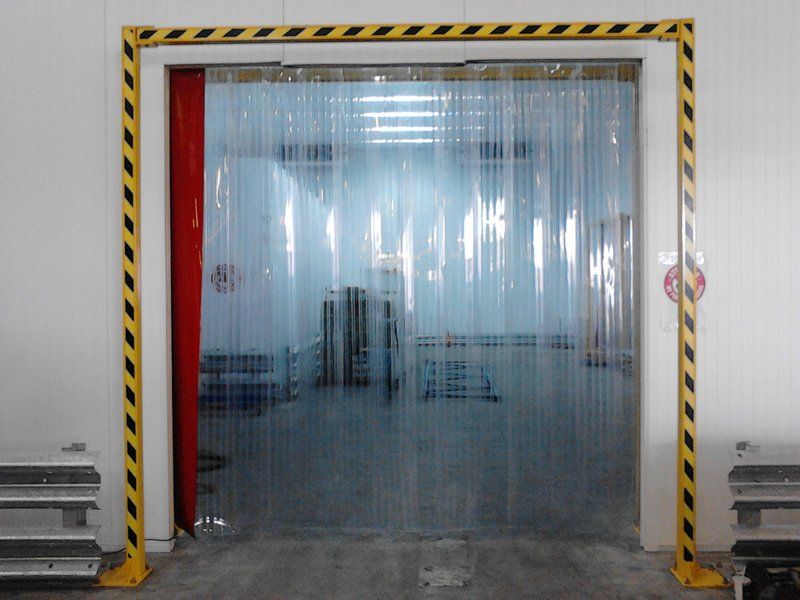
Many facilities use “standard clear” PVC for every application, missing out on the benefits of technical materials. For instance, in data centres or electronics manufacturing, standard PVC can build up static electricity as strips rub together. In welding bays, standard PVC does not provide the necessary UV filtration to protect bystanders from “arc eye.”
The Fix: Evaluate the specific hazards of each zone.
- Anti-Static PVC: Essential for cleanrooms and electronics environments.
- Welding Grade: Available in dark green or bronze to filter out harmful UV rays in workshops.
- Antimicrobial PVC: Perfect for food preparation areas to inhibit the growth of bacteria.
By choosing the correct material for the specific environment, you enhance workplace safety and ensure compliance with UK health and safety regulations.
Maximising the ROI of Your PVC Curtains
Industrial strip curtains are one of the most cost-effective investments you can make for your facility. When specified correctly, they pay for themselves within months through reduced energy consumption and improved workflow.
Since 1978, Redwood Strip Curtains has prioritised quality and reliability. Whether you need a full hook-on kit for a new loading bay or individual replacement strips to refresh an existing installation, our team is ready to provide the expertise you need.
Avoid the “quick fix” of cheap, low-quality imports. Invest in British-manufactured quality that is built to last in the most demanding industrial environments.
Ready to optimise your facility?
Get a PVC curtain quote today or browse our full range of industrial supplies in our shop. For technical queries, visit our FAQ page or contact our technical desk directly.