
At Redwood Strip Curtains, we’ve been help businesses manage their environments since 1978. We know that when you’re running a warehouse, a professional kitchen, or a high-tech manufacturing plant, every degree matters. Choosing the wrong material for your door strips isn’t just a minor oversight: it’s a recipe for cracked plastic, safety hazards, and energy bills that look like they’ve gone on a permanent holiday.
If you are standing in a doorway wondering why your current curtains feel like sheets of ice or why your freezer motor is screaming for mercy, you’re likely facing the classic dilemma: Standard PVC vs. Polar Grade.
Stop letting your heating (or cooling) budget fly out the door. Learn how our PVC strip curtains slash energy bills and maintain the perfect climate in cold rooms, chillers, and warehouses.
The Cold Reality: Why Material Grade Matters
In the world of industrial supplies, “one size fits all” is a myth that ends in frustration. PVC (Polyvinyl Chloride) is a versatile polymer, but its physical properties change dramatically with temperature.
Most people assume that plastic is just plastic. But at low temperatures, standard PVC undergoes a “glass transition.” It loses its molecular flexibility, becomes rigid, and eventually turns brittle. On the other hand, Polar Grade PVC is engineered with specific low-temperature plasticisers that keep the material supple even when the mercury plummet.
Standard PVC: The Versatile All-Rounder
Standard PVC is the workhorse of the industry. It’s clear, durable, and cost-effective. If you’re looking to separate a dusty warehouse from a packing area or keep birds out of a loading bay, this is your go-to.
Technical Specs:
- Operating Range: -15°C to +40°C.
- Best For: Internal partitions, external doorways in temperate climates, and ambient storage.
The Catch:
While Standard PVC is rated down to -15°C, that is its absolute breaking point. Long before it reaches that temperature, it starts to stiffen. If you’ve ever tried to push through a standard curtain in a walk-in freezer, you’ll know it feels like walking through a wall of plywood. Nobody likes a brittle curtain, and in a high-traffic area, that stiffness leads to stress fractures and snapping.
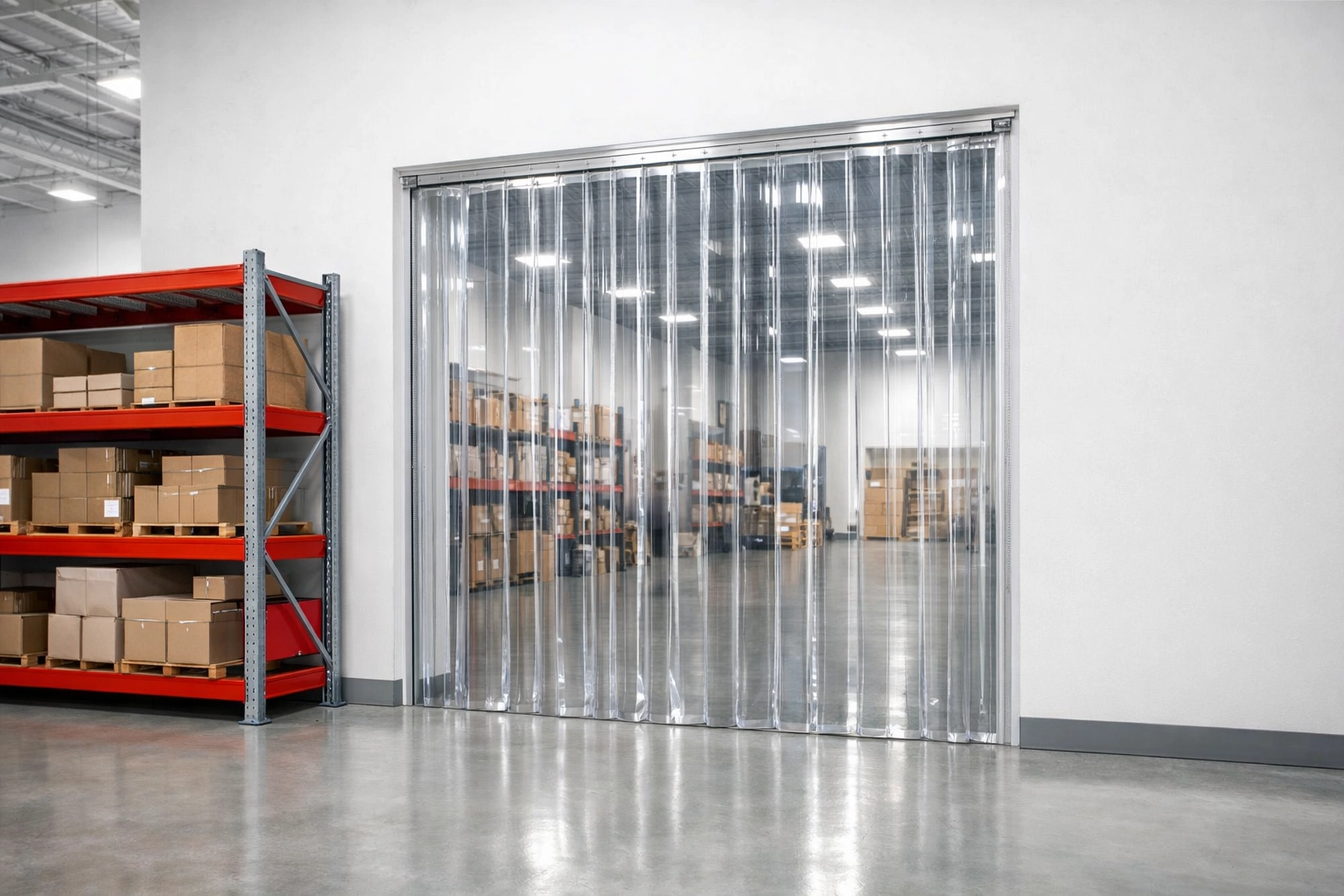
Polar Grade PVC: The Deep Freeze Specialist
Polar Grade (often called Freezer Grade) is designed specifically for environments where the temperature stays consistently near or below freezing.
Technical Specs:
- Operating Range: +10°C to -40°C.
- Best For: Walk-in freezers, cold storage facilities, refrigerated trucks, and blast chillers.
Why it’s different:
Polar Grade stays soft. It contains a higher concentration of specialised additives that prevent the polymer chains from locking up in the cold. This means that at -25°C, the curtain remains as flexible as a standard curtain would be on a summer’s day.
The Comparison: Head-to-Head
| Feature | Standard PVC | Polar Grade PVC |
|---|---|---|
| Ideal Temp Range | -15°C to +40°C | -40°C to +10°C |
| Flexibility in Freezers | Poor (Becomes rigid) | Excellent (Stays soft) |
| Durability in Cold | Low (Prone to cracking) | High (Resistant to impact) |
| Visibility | High | High (with frost resistance) |
| Primary Use | Warehouses / Dust Control | Chillers / Freezers |
Why You Should Choose Polar Grade for Cold Rooms
If your application involves temperatures below 0°C, the choice isn’t just a preference: it’s a necessity. Here is why Polar Grade wins every time in the cold.
1. Durability and Longevity
In a busy cold room, pallets, forklifts, and staff are constantly moving through the doorway. When a standard PVC strip is frozen and rigid, it can’t “give” when hit. Instead, it cracks or shears off at the hook-on medium duty rail. Polar Grade absorbs the impact, bending easily and snapping back into place, which means fewer replacements and less downtime.
2. Maximum Energy Efficiency
The primary job of a PVC curtain is to create a thermal seal. For a seal to be effective, the strips must hang straight and overlap perfectly. Standard PVC strips often “curl” or “bow” when they get too cold, leaving gaps where expensive cold air escapes and warm, moist air enters. Polar Grade maintains its shape and seal, potentially reducing energy consumption by up to 25% by preventing the “chimney effect” in your doorway.
3. Safety First
A rigid, frozen strip of plastic is a safety hazard. It can have sharp edges if it cracks, and it requires significant force to push through, which can cause trips or accidents for staff carrying heavy loads. Furthermore, Polar Grade is specifically designed to resist the buildup of frost and ice on the surface, ensuring that visibility remains high and the floor stays clear of dangerous ice patches caused by condensation.

When Standard PVC is Actually Better
It might seem counterintuitive, but you shouldn’t use Polar Grade everywhere. Because of those extra plasticisers, Polar Grade becomes very “tacky” or sticky if it gets too warm (above +10°C to +15°C).
If you install Polar Grade in a standard warehouse doorway during the summer, the strips will stick together like glue, making it nearly impossible to walk through and causing the PVC to “drag” on clothing and equipment. If your environment fluctuates between ambient and slightly chilled, a quality PVC standard grade is usually the smarter, more comfortable choice.
Cost vs. Value: The Long Game
We understand that budget is always a factor. Polar Grade does carry a slightly higher upfront cost than standard PVC. However, in a cold room environment, the “cheap” option is often the most expensive in the long run.
Think about:
- Energy Loss: A poorly sealing curtain forces your compressors to work overtime.
- Replacement Costs: Replacing cracked standard strips every six months costs more than buying Polar Grade once.
- Product Integrity: Fluctuating temperatures in a freezer can lead to food spoilage or pharmaceutical degradation.
At Redwood, we focus on reliability and consistency. We’ve been around since 1978 because we don’t cut corners on material quality. Whether you need a full kit or just replacement pvc door strips, we ensure the grade matches the job.
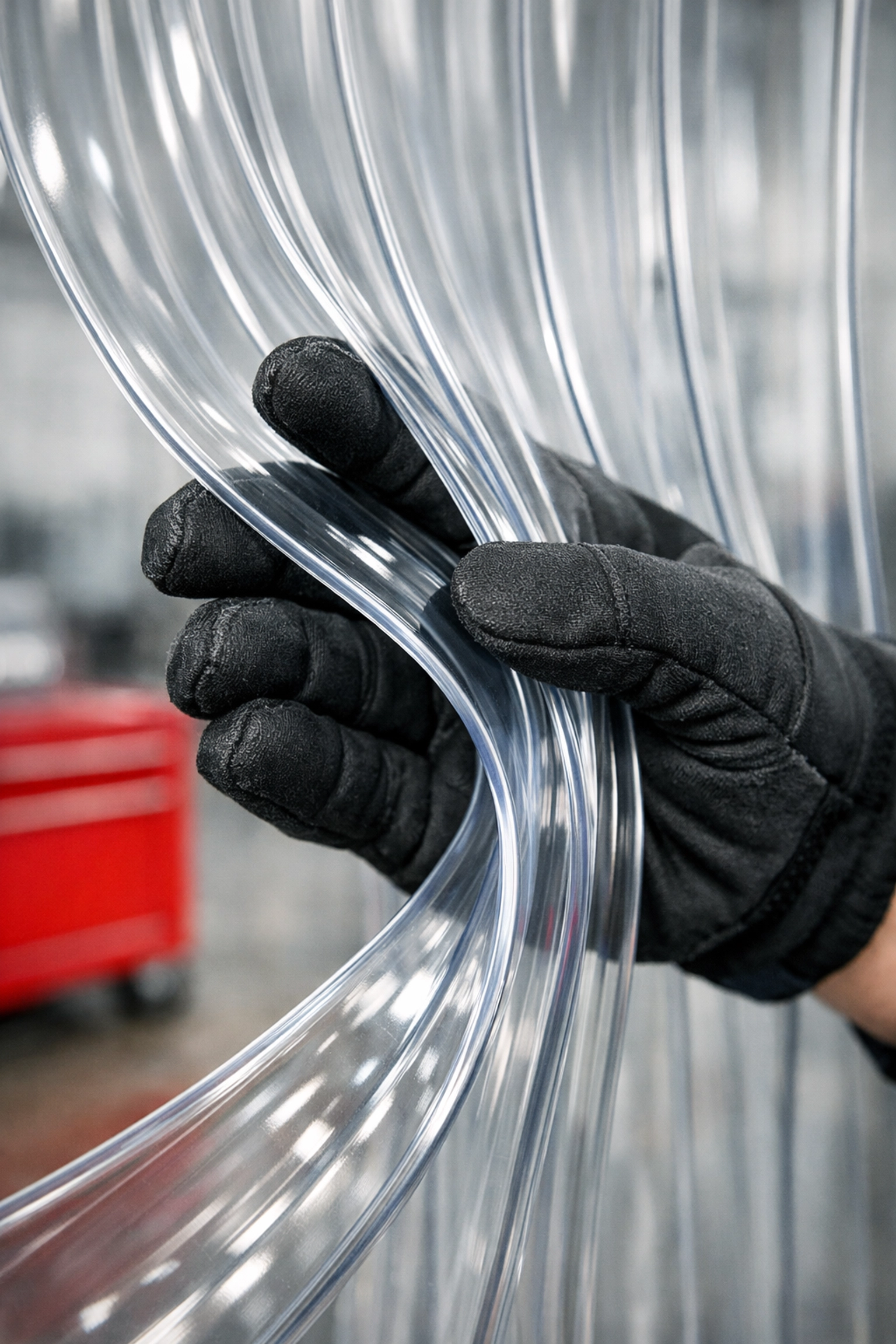
How to Measure for Your New Curtains
Ready to make the switch? Getting the right fit is just as important as getting the right grade. A curtain that is too short allows cold air to bleed out from the bottom, while one that is too long will drag and tear.
We’ve made the process simple. You can visit our measuring advice page for a step-by-step guide on how to get the perfect dimensions for your doorway. Once you have your numbers, you can get a pvc curtain quote today via our online calculator.
Maintenance Tips for Cold Room Curtains
To get the most out of your Polar Grade curtains, follow these simple rules:
- Keep them clean: Use warm water and a mild detergent. Avoid harsh chemicals that can strip the UV stabilisers or cause the PVC to cloud.
- Check the hang: Ensure the strips are overlapping correctly. If a strip becomes twisted, straighten it out to maintain the thermal seal.
- Monitor for wear: Check the top of the strips near the hanging rail for any signs of fatigue once a month.
Conclusion: Don’t Get Left in the Cold
Choosing between Standard and Polar Grade comes down to one question: What is the temperature of your room?
- Above 0°C? Standard PVC is your friend.
- Below 0°C? Polar Grade is the only way to go.
If you’re still unsure, don’t guess. Our team has decades of experience helping businesses find the exact solution for their specific sector. Whether it’s a walk-in chiller for a butcher or a massive cold-chain distribution centre, we have the stock and the expertise to help.
Check out our full range in the catalog or head straight to the shop to see our standard kits. For standard, non-bespoke items, we offer fast shipping to get your facility back to peak efficiency as quickly as possible.
Still have questions?
Visit our FAQ or contact us directly. We’re here to help you keep the cold where it belongs.