
Frequently used warehouse doorways can lose heated air and admit cold draughts whenever the main door is open, poorly sealed or incorrectly specified. The effect is especially noticeable at loading bays, goods-in areas and doors between heated and unheated zones.
The good news is that practical changes can help. Keep doors closed when they are not actively in use, inspect the surrounding structure and choose warehouse strip curtains that match the opening, traffic and temperature.
This guide covers seven common mistakes : and the realistic fix for each.
The seven mistakes at a glance
| Mistake | Likely consequence | Recommended fix |
|---|---|---|
| Leaving doors open unnecessarily | More warm air escapes and cold air enters | Review door-open time and operational controls |
| Relying on damaged or poorly fitted seals | Draughts continue around the closed door | Inspect seals, thresholds, guides and surrounding surfaces |
| Choosing the wrong PVC material or temperature grade | Strips may become too stiff, too stretchy or wear prematurely | Match standard clear PVC or Polargrade to the environment |
| Using insufficient or incorrect overlap | Gaps allow more air movement through the curtain | Match overlap to height, wind, traffic and rail system |
| Selecting a rail system that does not match traffic | Strips or hardware can suffer unnecessary damage | Choose the system according to pedestrian, pallet-truck or forklift use |
| Ignoring gaps and poor measurement | The curtain may not cover the opening effectively | Measure the opening, fixing position and surrounding obstructions |
| Failing to inspect or replace worn strips | Damaged areas reduce the barrier’s effectiveness | Schedule checks and replace individual strips where appropriate |
1. Leaving warehouse doors open unnecessarily
The most obvious source of warehouse door heat loss is also one of the most common: leaving a door open after a vehicle, pallet truck or person has passed through.
An open doorway allows warm internal air to escape while colder external air enters. Wind and differences in temperature can increase air movement, particularly at exposed loading bays. However, the right response is not always to install a curtain and leave the main door permanently open.
The fix
Start with a simple traffic assessment:
- How many times does the door open during each shift?
- How long does it remain open after each movement?
- Is it open because of loading activity, ventilation or poor operating habits?
- Can loading tasks be grouped or the door controls adjusted?
- Is there a separate pedestrian route?
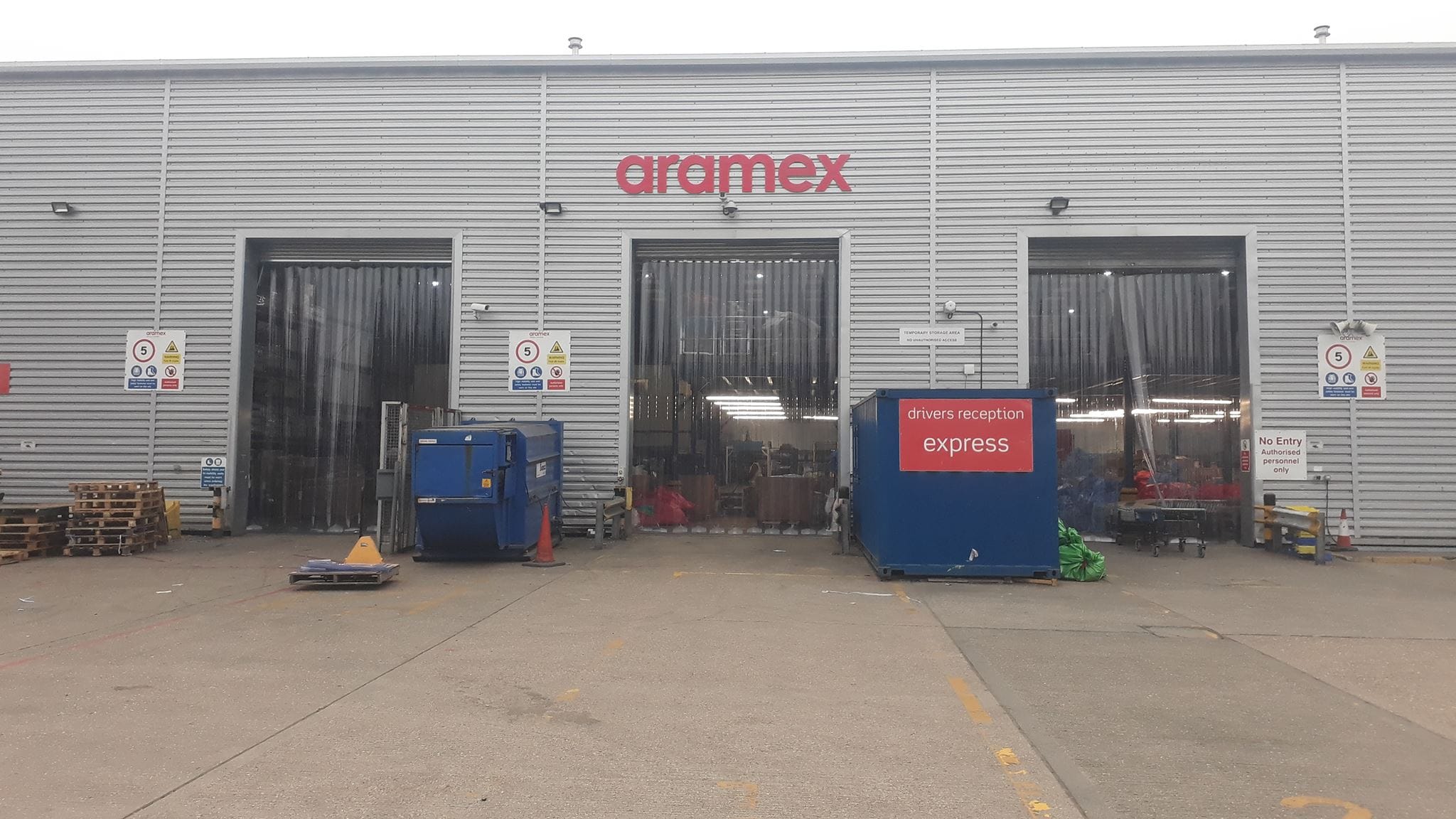
Keep the main door closed when it is not actively needed. Then consider loading bay strip curtains as a secondary flexible barrier where people, pallet trucks or vehicles need to pass regularly.
2. Relying on damaged or poorly fitted seals
A strip curtain cannot correct every problem around an industrial door. If the main door has damaged side seals, a worn bottom seal, gaps around the guides or movement in the frame, draughts may continue even when it is closed.
This is particularly important for roller shutters and sectional overhead doors. A curtain fitted below a poorly sealed door may reduce some direct airflow, but it will not repair the door itself.
The fix
Inspect the full door perimeter. Check:
- Side seals and vertical guides
- Head seals and the area around the door mechanism
- Bottom seals and thresholds
- Gaps between the frame and building fabric
- Damage caused by vehicle impacts
- Whether the door closes squarely
Repair or replace defective seals before assessing the curtain requirement. Also check whether the opening is exposed to prevailing wind or has a sheltered internal position.
Where a strip curtain is suitable, fitting it inside the building can help protect the PVC from excessive weather exposure. Redwood’s FAQ guidance also explains why the rail must be fixed to a structurally supporting surface across the opening.
3. Choosing the wrong PVC material or temperature grade
PVC is not one universal material. The correct choice depends on the temperature, opening size, traffic and required flexibility.
For normal ambient areas and suitable above-freezing applications, standard clear PVC is a practical starting point. It provides visibility and flexibility for many warehouse and industrial openings. You can review Redwood’s Standard PVC Strip Curtain Kits or Standard Clear PVC Rolls for available configurations.
For freezer and sub-zero environments, use Polargrade PVC. It contains additional plasticiser to help the strips remain flexible in colder conditions. Standard clear PVC may not be suitable for a freezer application.
Conversely, Polargrade is not automatically the best choice above freezing. Its extra flexibility can make it feel excessively stretchy or sticky and may make passage more difficult.
The fix
Confirm:
- The lowest and highest operating temperatures.
- Whether the curtain is internal, sheltered or externally exposed.
- The type and frequency of traffic.
- The required strip width and thickness.
For guidance, 200mm or 300mm strips may be a starting point for openings up to approximately 3m. For openings around 3–5m, 300mm or 400mm strips may be appropriate. For taller openings, 400mm strips are often considered. These are starting points rather than universal rules; wind, traffic and the selected hanging system also matter.
4. Using insufficient or incorrect overlap
Overlap is the amount by which one strip covers the next. If it is too limited for the opening and conditions, the curtain can develop more noticeable gaps when wind moves the strips or when traffic passes through.
Too much overlap can also make passage more difficult, especially for pedestrians or pallet trucks. The objective is a workable balance between access and environmental separation.
The fix
Match overlap to:
- Curtain height
- Wind exposure
- Internal or external location
- Traffic type
- Strip width and thickness
- Hanging system
The taller the curtain, the more important it is to keep the strips overlapped down their length. Rail systems also offer different overlap options. For example, Redwood’s loading bay curtain system uses 400mm x 4mm clear PVC with a stated 60% overlap for its heavy-duty configuration. That does not make 60% suitable for every doorway.

5. Selecting a rail system that does not match traffic
A pedestrian doorway and a busy forklift entrance do not place the same demands on a curtain. Choosing a light-duty rail because it is cheaper can lead to avoidable damage if the opening is used heavily by vehicles.
Consider the difference between:
- Pedestrian traffic: lighter strips and easier movement may be the priority.
- Pallet-truck traffic: a more robust configuration may be needed, particularly where use is frequent.
- Frequent forklift traffic: the rail, fixings, strip thickness and overlap all need to be considered as a heavy-duty system.
Redwood offers four broad hanging-system approaches:
- Hook-on rails: suitable for light to medium use, including personnel and pallet-truck environments.
- Quickmount rails: intended for lighter-duty areas where convenient removal is important.
- Twin-track bolt-on rails: useful for medium-duty applications and hard-working areas.
- Swivel-hinge rails: designed for demanding industrial areas with frequent forklift use.
For busy loading bays, the Redwood loading bay system is made to the opening size and uses a heavy-duty Swivel Hinge rail. For warehouse storage areas with personnel, trolley or carefully managed occasional forklift traffic, the Warehouse Storage Hook-On Curtain Kit may be more suitable.
6. Ignoring gaps and poor installation or measurement
A curtain can only help where it covers the opening properly. Gaps at the sides, an incorrect drop or a rail fixed away from the intended position can reduce its effectiveness.
Measurement errors are particularly common around roller shutters and sectional overhead doors. The visible opening may not be the correct point from which to measure the curtain height.
The fix
Before ordering, record:
- Opening width
- Opening height
- Intended rail position
- Available fixing surface
- Door guides, beams, pipes and other obstructions
- Whether the curtain will be face fixed, underside mounted or set behind the door
Use Redwood’s measuring advice for diagrams covering pedestrian doors, roller shutters and sectional overhead doors. If the curtain is being fitted behind a roller shutter, check whether a supporting beam or suitable brackets are required.
The rail must be fixed across the full opening to a structurally supporting surface. Do not assume that the surrounding cladding or a lightweight frame can support the curtain.
7. Failing to inspect or replace worn strips
PVC strips are consumable components. Their service life depends on traffic, weather, cleaning, chemicals and the condition of goods or vehicles passing through them.
A few damaged strips may appear insignificant. However, missing, torn, heavily scratched or permanently distorted strips create gaps and may allow more draughts through the doorway.
The fix
Add strip curtains to the planned maintenance schedule. Inspect them for:
- Tears and splits
- Missing strips
- Severe scratches or loss of clarity
- Permanent curling or distortion
- Loose plates, fixings or hooks
- Dirt or chemical residue
- Damage caused by sharp pallet or vehicle edges
Clean PVC gently with a soft damp cloth and mild washing-up liquid. Avoid harsh abrasives and strong chemical cleaners.
One advantage of a suitable hanging system is that individual strips can often be replaced instead of changing the whole curtain. Keep the original width, thickness, overlap and hanging method consistent when ordering replacements.
Winter preparation checklist
Before colder weather arrives, review each frequently used doorway:
- Record door-open time and traffic type.
- Repair damaged door seals and thresholds.
- Check whether the main door closes correctly.
- Inspect existing PVC strips and rail fixings.
- Look for side, top and bottom gaps.
- Confirm that the PVC grade suits the operating temperature.
- Check the overlap against the opening height and wind exposure.
- Make sure the rail is fixed to a sound structure.
- Clean the strips before inspecting their condition.
- Order replacement strips before existing damage affects operations.
When strip curtains are not enough
Strip curtains can help reduce draughts and air movement through an open doorway, but they are not a replacement for every door or building improvement.
Depending on the site, also assess:
- Door seals and thresholds
- Dock seals or dock shelters
- High-speed doors
- Air curtains
- Heating controls and zoning
- Insulation around the opening
- Roof, wall and floor defects
- Gaps in the wider building envelope
A heavily exposed loading bay with constant vehicle movements may need a combination of measures. A strip curtain can form part of that strategy, while the main door, dock equipment and building fabric address other sources of heat loss.
Conclusion: fix the cause before choosing the curtain
Reducing warehouse heat loss starts with practical site information. Control unnecessary door-open time, repair defective seals, measure accurately and match the PVC, overlap and rail system to the working environment.
For pedestrian and warehouse openings, explore standard PVC strip curtains. For demanding forklift and loading-bay traffic, review heavy-duty loading bay strip curtains.
If you need help selecting a configuration, send Redwood the opening dimensions, temperature conditions and traffic details. We can help you identify a suitable option without guessing.
Eligible standard, non-personalised items ordered before noon may qualify for next working day delivery. Made-to-measure and personalised curtains are not treated as standard stock items, so confirm the expected dispatch time when requesting a quotation.